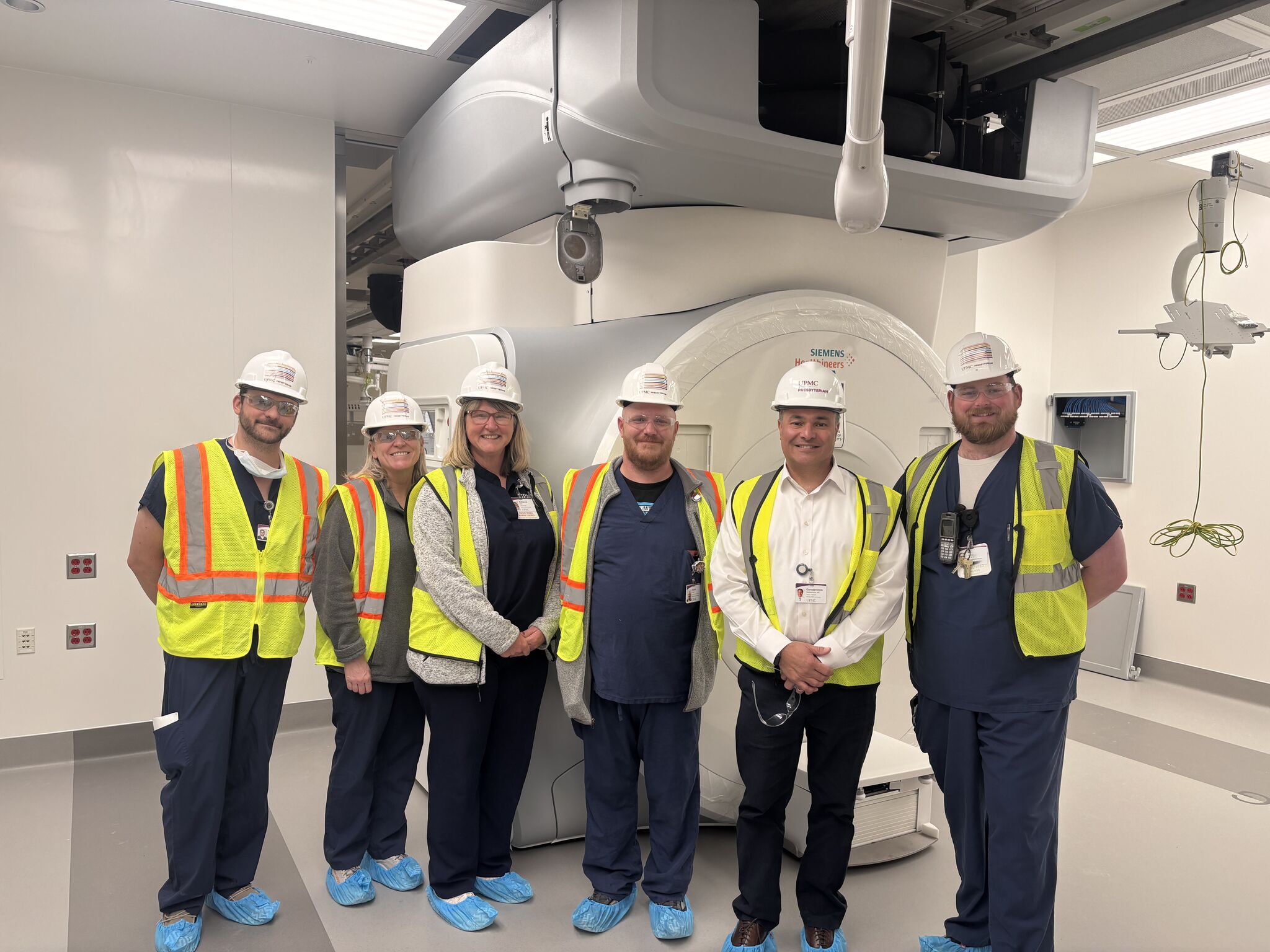
Pittsburgh, April 23, 2026 — As the Daniel G. and Carole L. Kamin Tower at UPMC Presbyterian nears completion, the Department of Neurological Surgery is preparing to step into a new era of image-guided surgical care. When the tower opens to patients on January 24, 2027, it will house two paired neurosurgery operating rooms designed around one of the most advanced imaging platforms in modern surgery: a rail-mounted intraoperative MRI shared between the two suites.
The configuration allows surgeons to obtain an MRI of a patient's brain during surgery without halting the procedure or transferring the patient to another floor for imaging. Equipped with a 4-ton magnet, the scanner travels between the two operating rooms along a dedicated overhead rail. When real-time imaging is needed, the MRI glides into the active OR to capture scans mid-procedure, then returns to serve the adjacent suite. The setup is part of UPMC's new Interventional MRI Suite (iMRIS) and reflects the growing role of intraoperative imaging in neurosurgical decision-making, from verifying tumor resection margins to guiding catheter placement and targeted ablation.
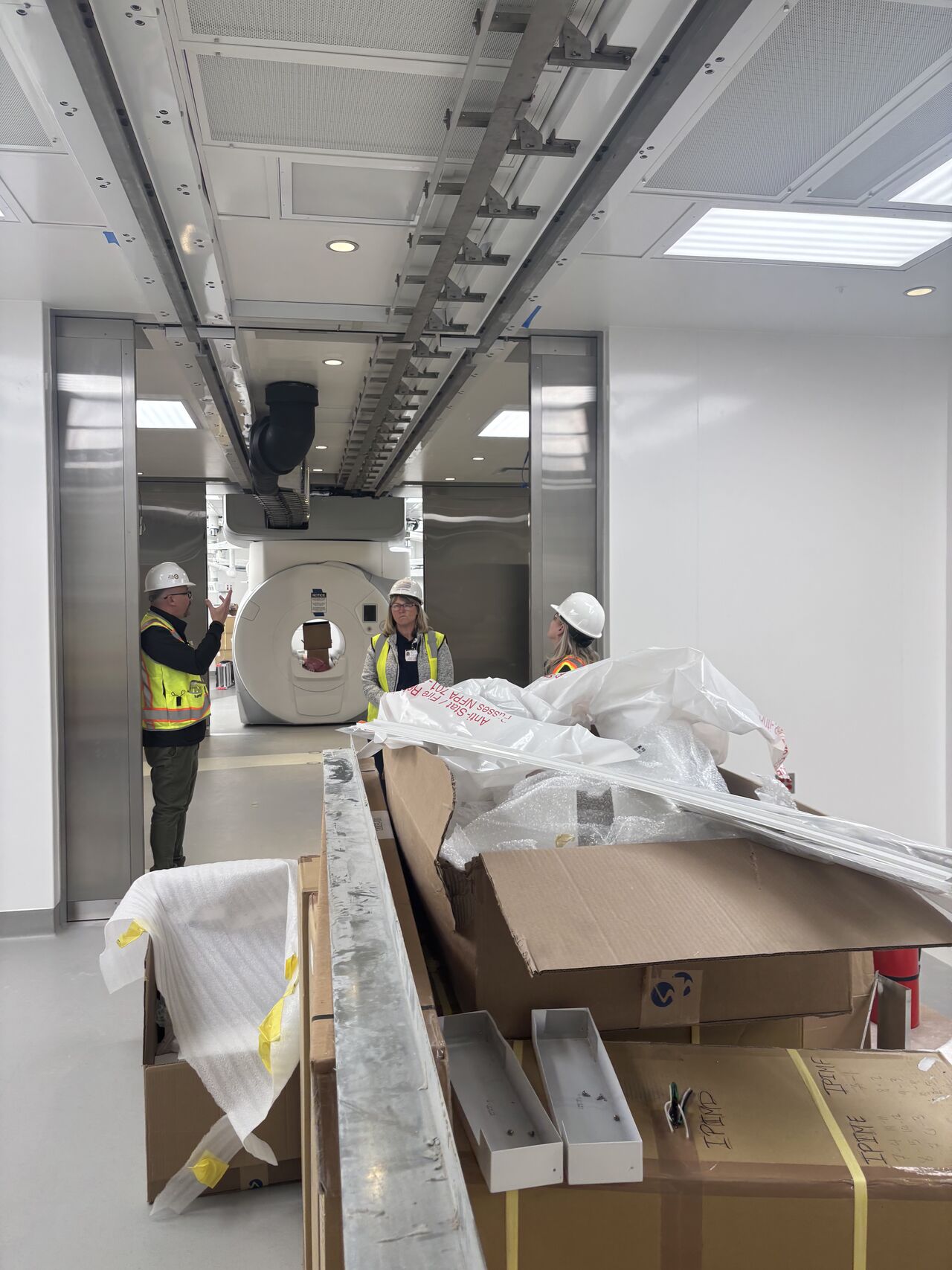
For neurosurgical oncology in particular, this capability carries real weight. Surgeons will be able to confirm the extent of tumor resection before closing, reducing the likelihood that residual disease goes undetected. The technology complements several of the Department's existing image-guided programs directed through the Center for Image-Guided Neurosurgery (CIGNS), led by Costas Hadjipanayis, MD, PhD. Dr. Hadjipanayis has shared that the team plans to pair the new iMRIS system with state-of-the-art neuronavigation, focused ultrasound, laser interstitial thermal therapy (LITT), and other real-time imaging modalities to expand minimally invasive options for patients with brain tumors and functional disorders.
The paired ORs are also designed with teaching, teamwork, and workflow in mind. Each suite will be supported by a dedicated circular conference area that UPMC has nicknamed a "holodeck," equipped with large screens for reviewing imaging, discussing next steps, and training residents and students in a dedicated space rather than a crowded hallway.
Beyond the new neurosurgery suites, Kamin Tower will bring 636 private patient rooms, 11 new operating rooms, and floor-to-ceiling natural light throughout the $1.3 billion, 17-story building. The tower's specialty ORs are tailored to the UPMC Presbyterian campus's focus on neurosurgery, cardiology, and transplant care. Its first four floors, known as "The Grove," will include a sit-down restaurant, retail spaces, art galleries, and community programming open to the broader Pittsburgh community.
For the Department of Neurological Surgery, Kamin Tower represents more than a change of address. It is a platform for the next generation of intraoperative imaging, surgical precision, and multidisciplinary care, and a space our faculty, residents, and clinical teams have helped shape from the earliest design sessions to the final preparations now underway.