

Neurosurgery Awareness Month marks the specialty every August. At the University of Pittsburgh Department of Neurological Surgery, it is also an anniversary: ninety years of operations, devices, and training programs that started in Pittsburgh and are now practiced worldwide.
Each August, the American Association of Neurological Surgeons leads Neurosurgery Awareness Month to educate the public about neurological conditions and the people who treat them. The 2026 theme is Precision That Changes Lives.
Ninety years of firsts
The department was not built on a single breakthrough. It was built on a habit of asking whether an operation could be made smaller, more precise, or safer, and then testing the answer.
1936A service begins, and so does a career that opened the field
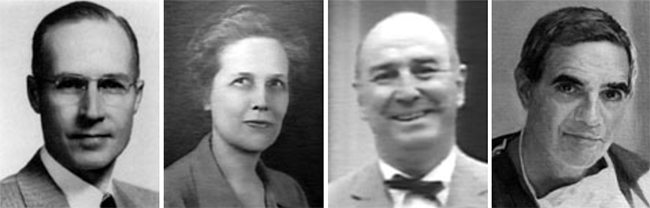
Stuart Niles Rowe, MD, moved to Pittsburgh to build a dedicated neurosurgical service across the region's loosely affiliated hospitals. The same year, Dorothy Klenke Nash, MD, the first woman to practice neurosurgery in the United States, came to the city. She later joined Rowe at Presbyterian University Hospital and led the service while he served in World War II.
A residency built on research, not technique alone
Rowe started the first formal neurosurgery residency in the city at West Penn Hospital. In 1952 it consolidated under the University of Pittsburgh at Presbyterian University Hospital, where it continues today. He recruited residents for independent thought and thorough literature review, on the argument that clinical judgment has to be trained as deliberately as technique.
1971Microvascular decompression finds its home
Peter J. Jannetta, MD, became the department's first chair. His microvascular decompression procedure, known internationally as the Jannetta Procedure, gave patients with trigeminal neuralgia an effective option when medication failed, and Pittsburgh became the center where it was refined and taught. He trained 49 residents here, including four future department chairs.
1987The first Gamma Knife in North America
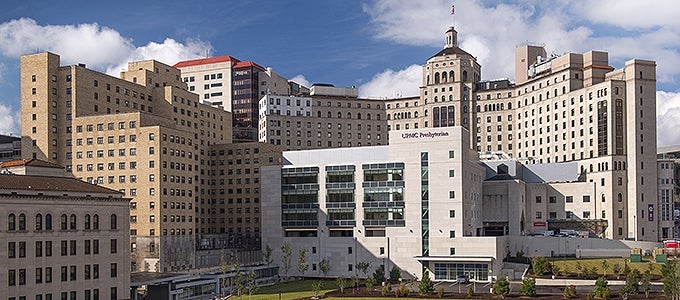
L. Dade Lunsford, MD, brought the first North American Gamma Knife to the University of Pittsburgh, then introduced each succeeding generation of the technology, including Perfexion in 2007 and Leksell Icon in 2016. Deep tumors and vascular malformations once considered inoperable are now treated in a single session with no incision to expose the target. More than 20,000 patients have been treated in the department's Gamma Knife units since 1987.
Brain computer interfaces move into clinical trials
In 2007 the department joined engineers, neuroscientists, and rehabilitation specialists across Pitt to bring brain computer interfaces to patients with motor disabilities. By 2012, a participant with tetraplegia was controlling a prosthetic limb through two implanted electrode arrays, first across seven degrees of freedom and later ten, reaching for objects and shaping the hand around them. A second participant, implanted with stimulating arrays in sensory cortex, reported natural-like sensations in individual fingers when the robotic hand was touched, and identified which finger while blindfolded.
2026What the habit looks like now
In June, faculty from the department and Pitt's School of Computing and Information described a mixed reality platform that lets surgeons manipulate real-time imaging in the operating room without breaking sterility. Days earlier, the department introduced a rapid blood test for traumatic brain injury into routine clinical care at UPMC Presbyterian, moving TBI biomarkers into standard bedside practice.
Where the work happens
Care is organized into centers of excellence, each built around a disease and the technique developed to treat it. Subspecialists work in their own areas and collaborate across centers when a patient needs more than one.


Cranial Nerve Program
Microvascular decompression and related procedures for trigeminal neuralgia, hemifacial spasm, and other cranial nerve disorders. Cranial Nerve Program
Cranial Base Center
The endoscopic endonasal approach, pioneered at the University of Pittsburgh, reaches tumors at the base of the skull through the nose. Endoscopic endonasal approach
Image-Guided Neurosurgery
Gamma Knife radiosurgery, focused ultrasound, fluorescence-guided surgery, and an intraoperative MRI suite. Image-Guided Neurosurgery
Epilepsy and Movement Disorders
Stereo-EEG, laser ablation, responsive neurostimulation, and deep brain stimulation, supported by the ROSA robot. Epilepsy and Movement Disorders
Human Neural Prosthetics
Under the surgical direction of Jorge A. González-Martínez, MD, PhD, the program studies interfaces that restore movement and sensation after paralysis. Human Neural Prosthetics
Spine Services
Minimally invasive and robotic-assisted spine surgery, spine radiosurgery, scoliosis correction, and pain management. Spine Services
Why it matters

A tumor pressing on her optic nerves was taking Veronica's sight. Using a minimally invasive approach pioneered at the University of Pittsburgh, the team at the UPMC Center for Cranial Base Surgery removed it and restored her vision.
Every technique on this page exists for a reason like that one. Precision is not an end in itself. It is what makes it possible to treat the disease and leave everything else intact.
The next first
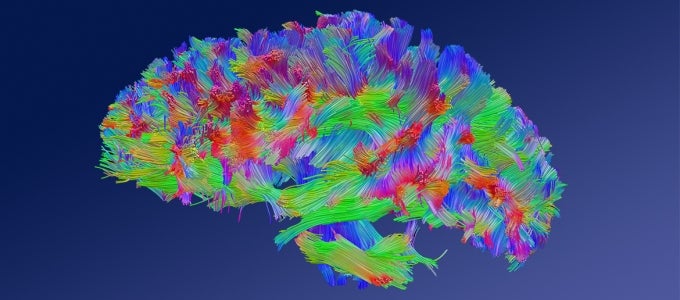
In fiscal year 2025, faculty and residents worked on nearly 200 research projects totaling more than $10.5 million in expenditures. Fifteen laboratories study brain tumor biology, fiber tractography, spinal cord stimulation, mixed reality surgical guidance, and computational spine outcomes. Marco Capogrosso, PhD, and Peter Gerszten, MD, are running parallel trials of spinal cord stimulation for motor recovery after stroke and for motor deficits in spinal muscular atrophy.
Each of those firsts was also taught forward. A 2011 study in the Journal of Neurosurgery ranked the department's residency the most productive in the nation for graduates who remain in academic neurosurgery, and a 2015 study placed its faculty publication output third among 103 programs. The program now trains 28 residents alongside more than 70 faculty, under interim chair Edith Tzeng, MD.
Common questions
What is Neurosurgery Awareness Month?
An annual observance led by the American Association of Neurological Surgeons each August. It exists to explain what neurosurgeons treat, from traumatic brain injury and brain tumors to spinal disorders and pediatric conditions, and to make the warning signs of those conditions more widely recognized.
What does a neurosurgeon actually treat?
The brain, the spine, and the peripheral nerves. Many patients seen by this department never have an operation. Treatment options are sometimes surgical and sometimes not, and the decision is made case by case.
How do I make an appointment or refer a patient?
Patients can refer themselves, or be referred by a physician or health care organization. Phone numbers for individual surgeons are listed on their profiles in the faculty directory, and the department's main line is 412-647-3685. See About Appointments for directions, parking, and what to bring.
Explore the department
Ninety years in, the work continues in the operating room, the laboratory, and the classroom.
Follow the department on Instagram, LinkedIn, and YouTube through August, and join the conversation using #NeurosurgeryAwarenessMonth.